SE28 garden maintenance guide for Thamesmead terraces
If you live in a Thamesmead terrace, you already know the garden is not always the easy part of the home. Space can be tight, borders can get shaggy faster than you expect, and one windy week can turn a neat outdoor area into a bit of a jumble. This SE28 garden maintenance guide for Thamesmead terraces is here to make the whole thing feel more manageable. It covers what matters, what to prioritise, and how to keep a terrace garden looking tidy, healthy, and genuinely usable without overcomplicating it.
Whether your outdoor space is a narrow rear garden, a front patch that needs constant tidying, or a terrace with paving, lawn, shrubs, and maybe a few awkward corners, the same rule applies: small spaces reward consistency. A little care done often usually beats a heroic once-a-month rescue job. And, to be fair, that rescue job always seems to land on the rainiest Saturday of the month.
In this guide, you'll find seasonal routines, practical methods, common mistakes to avoid, and the kind of realistic advice that helps terrace gardens stay under control all year. If you want to explore broader service support while you read, you can also look at garden maintenance services, lawn mowing options, and hedge trimming for jobs that need a steadier hand or regular attention.
Table of Contents
- Why SE28 garden maintenance guide for Thamesmead terraces Matters
- How SE28 garden maintenance guide for Thamesmead terraces Works
- Key Benefits and Practical Advantages
- Who This Is For and When It Makes Sense
- Step-by-Step Guidance
- Expert Tips for Better Results
- Common Mistakes to Avoid
- Tools, Resources and Recommendations
- Law, Compliance, Standards, or Best Practice
- Options, Methods, or Comparison Table
- Case Study or Real-World Example
- Practical Checklist
- Conclusion
- Frequently Asked Questions
Why SE28 garden maintenance guide for Thamesmead terraces Matters
Terrace gardens in SE28 tend to have a few things in common: compact layouts, practical surfaces, limited storage, and features that need regular attention because every inch is visible. A neglected terrace garden shows quickly. Weeds creep through paving joints, fences start to look tired, grass edges blur, and shrubs that were meant to be neat begin to block light or paths.
That matters for more than appearance. A well-kept garden feels easier to use. It's where you can put out a table in the evening, hang a washing line without wrestling with brambles, or simply open the back door and not sigh. Small space gardening is not about making everything perfect. It's about keeping the area functional, safe, and pleasant.
In Thamesmead, weather and exposure play a part too. Wind can dry containers quickly and scatter debris. Damp spells can encourage moss, slippery surfaces, and soft growth that goes wild before you know it. The maintenance approach needs to suit the setting, not fight it. That's the real difference between a garden that feels under control and one that becomes a weekend chore.
Expert summary: The best terrace garden maintenance in SE28 is steady, seasonal, and selective. Focus on visibility, safety, and simple routines first. Fancy extras can come later, if there is room for them.
How SE28 garden maintenance guide for Thamesmead terraces Works
A terrace garden maintenance plan works best when it is broken into repeatable tasks. Rather than treating the whole outdoor area as one big job, divide it into zones: hard surfaces, planting areas, lawn if there is one, fences or walls, access paths, and any storage or seating areas. That way, you can spot what needs attention fast.
For most Thamesmead terraces, the process usually looks like this:
- Inspect the space for weeds, dead growth, overgrown edges, drainage issues, and slipped or broken materials.
- Clear obvious debris such as fallen leaves, broken stems, litter, and windblown soil.
- Cut back or trim plants that are blocking access, crowding other plants, or looking untidy.
- Mow or edge lawns where applicable, keeping the cut consistent rather than very short.
- Tidy hard landscaping like paving, steps, decking, or gravel areas to reduce moss and mess.
- Refresh planting areas with mulch, compost, or replanting where gaps have appeared.
- Check for safety issues such as loose slabs, unstable pots, rotting timber, or low-hanging branches.
That sounds simple because it is simple, mostly. The trick is frequency. A small terrace can go from tidy to cluttered in a surprisingly short time. If you leave everything until it "really needs doing", it often needs doing badly.
If you want more structured support, the wider services overview is useful for understanding how routine care, clearance, and more involved work fit together. For overgrown spaces, garden clearance can be the right starting point before regular maintenance becomes realistic again.
Key Benefits and Practical Advantages
The obvious benefit is that your garden looks better. But that's only the start. Good maintenance gives you a calmer, safer, and more usable outside space, which is especially valuable in terrace homes where every square metre counts.
- More usable space: Clear paths, tidy borders, and controlled growth make the garden feel bigger than it is.
- Better plant health: Regular pruning, feeding, and watering help plants cope with local conditions.
- Reduced repair work: Catching moss, rot, blocked drainage, and broken edging early prevents bigger bills later.
- Improved kerb appeal: A cared-for front or rear terrace can lift the whole property's impression.
- Less stress: Short, regular jobs are easier to live with than one exhausting overhaul after months of neglect.
- Safer movement: Clean, even surfaces and trimmed growth reduce trips, slips, and blocked access.
There's also a practical money angle. Maintenance is usually cheaper than corrective work. Let a hedge become unruly and you may need more labour. Let a lawn thin out under bad mowing habits and you may be looking at reseeding or scarifying. Let paving collect moss and dirt and you'll spend longer on every clean-up. Small jobs now, fewer headaches later. Simple, but true.
Who This Is For and When It Makes Sense
This guide is useful for a few different types of SE28 residents. If you are a homeowner trying to keep on top of a modest terrace garden, the main value is structure. If you rent and want the garden to stay presentable without overdoing permanent changes, the focus is on light-touch care. If you manage a property or let a terrace out, consistency and reliability matter even more.
It also makes sense if your garden has one or more of these traits:
- narrow access that makes bulky work awkward
- paving or decking that needs regular cleaning
- shrubs that block light or pathways
- containers that dry out quickly in summer
- patchy lawn areas that need careful mowing
- fences, gates, or timber features needing routine checks
And yes, it matters even if you are the kind of person who thinks, "I'll just sort it next weekend." We've all said that. Then next weekend arrives with a soak-through drizzle and a garden that somehow doubled in chaos overnight.
If your outdoor area needs a reset rather than simple upkeep, it may help to look at landscaping or landscape gardening to improve the structure of the space before maintenance becomes easier.
Step-by-Step Guidance
A good terrace garden routine does not need to be complicated. It needs to be repeatable. Here is a practical way to handle it.
1. Start with a quick visual sweep
Walk the garden slowly and look for what feels off. Are any paths blocked? Are weeds appearing where they shouldn't? Is one plant taking over? Does the paving look slippery? A quick visual sweep in daylight will catch far more than you think. In the early morning, you'll often notice wet patches, broken stems, and tilted pots more clearly too.
2. Remove debris before anything else
Always clear the loose stuff first. Leaves, old flower heads, dead stems, wrappers, and accumulated soil make the whole place feel untidy. They also hide problems underneath. Use a rake, broom, or hand fork as needed, and don't be shy about bagging up waste early.
3. Tackle edges and boundaries
On terraces, edges matter. A crisp lawn edge, clean border, or trimmed hedge makes the whole garden read as "maintained". Edging is one of those jobs that looks small but changes everything. If you only have time for one detail, make it the edges.
4. Prune and trim with a purpose
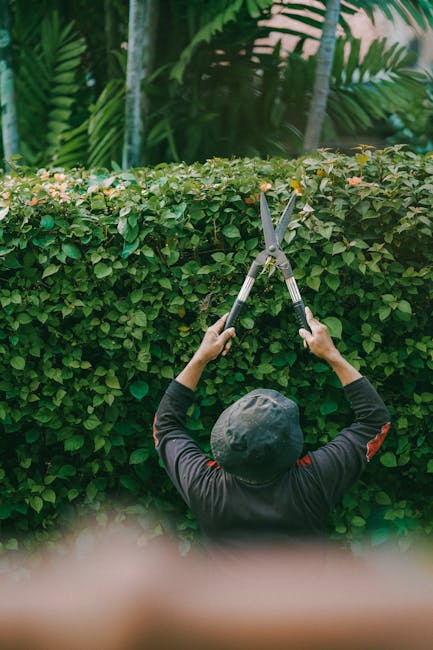
Don't trim just for the sake of trimming. Cut back growth that is blocking light, crowding paths, rubbing against walls, or preventing air movement. For hedges and shrubs, steady shaping is usually better than dramatic cutting. If a hedge is especially thick or tall, professional hedge trimming can give a far cleaner result than trying to wrestle it yourself on a rickety step ladder. And nobody wants that story.
5. Deal with the lawn properly if you have one
Treat the lawn as a living surface, not a carpet. In a small terrace garden, mowing too short is a common mistake. It can weaken the grass, expose bare patches, and encourage weeds. Keep the blades sharp, mow when the grass is dry enough to cut cleanly, and avoid taking off too much at once. If the lawn is tired or patchy, regular care plus feeding and overseeding may help more than frequent aggressive cutting.
6. Clean hard landscaping areas
Paving, paths, steps, and decking need different treatment from planting beds. Sweep first, then clean in a way that suits the material. Hard surfaces often hold dirt, algae, and moss, especially where shade lingers. Decking in particular needs a careful approach so you do not damage the timber or make it too slick. If wooden features are part of your space, decking services can help with repairs, upgrades, or a better finish.
7. Water and feed thoughtfully
Container plants and raised beds often dry out faster than people expect. Water deeply enough to reach roots, not just the surface. Early morning is usually a sensible time, especially in warmer spells. Feed where necessary, but don't overdo it. More fertiliser is not always more growth. Sometimes it just creates weak, floppy plants that need more attention later.
8. Finish with a tidy-up pass
Once the main work is done, do a second walk-through. Put tools away, check that waste is collected, and look again at the overall shape of the space. This is the moment where the garden starts to feel calm again. A tiny last touch can make a surprisingly big difference.
Expert Tips for Better Results
A few habits make terrace garden maintenance much easier over time.
- Keep pruning light and regular. Small cuts are easier to manage than one severe intervention.
- Use containers strategically. Pots add interest, but too many can make a small terrace feel cramped.
- Match plants to the space. Sun-loving plants in a shaded terrace will always struggle a bit. Better to choose well from the start.
- Think in layers. Ground level, mid-height planting, and one or two vertical elements often look more balanced than lots of competing features.
- Store tools somewhere dry. If your tools are rusty or blunt, every job feels harder. Annoyingly so.
- Mulch bare soil where possible. It helps suppress weeds and keeps moisture in for longer.
One simple expert habit: spend five minutes at the end of each visit on the part you are most likely to ignore. Usually it is a corner, the fence line, or the strip behind a bin store. Those are the areas that quietly make the garden look finished or unfinished. Funny how that works.
If sustainability matters to you, it is also worth reading the site's recycling and sustainability approach. Leftover green waste, prunings, and old materials should be handled responsibly, especially during bigger clear-outs.
Common Mistakes to Avoid
Most terrace garden problems are not dramatic. They are small mistakes repeated over time. The good news? They are easy enough to correct once you know what to watch for.
- Cutting too much at once: This can stress shrubs, hedges, and even some perennials.
- Letting weeds seed freely: A few missed weeds now often mean a bigger battle later.
- Using the wrong tool for the surface: A harsh approach can scar decking or disturb paving joints.
- Ignoring drainage: Puddles, damp patches, and recurring moss usually point to a problem worth checking.
- Overcrowding small spaces: Too many pots, ornaments, or planters can make maintenance more difficult than it needs to be.
- Skipping seasonal work: Waiting for a full overhaul tends to make the next job less pleasant and more expensive.
A lot of people also forget the simple stuff: trim at the right time of day, wear decent gloves, and keep blades sharp. Nothing glamorous there, but it saves time and frustration. Truth be told, most good garden work looks boring from the outside. That's probably why it works.
Tools, Resources and Recommendations
You do not need a van full of gear for a terrace garden. In many cases, a compact set of well-chosen tools is better than a pile of cheap ones. A few basics go a long way.
| Tool or Resource | Best For | Why It Helps |
|---|---|---|
| Hand shears | Small hedges, shaping shrubs | Give precise control in tight spaces |
| Sharp secateurs | Deadheading and light pruning | Make cleaner cuts and reduce plant stress |
| Broom or leaf rake | Paths, patios, decking | Keeps hard surfaces tidy without damage |
| Garden fork or hand fork | Weed removal, soil loosening | Useful for compact beds and borders |
| Hose or watering can | Containers and planted areas | Helps apply water where it is actually needed |
| Gloves and sturdy footwear | General maintenance | Improves safety and comfort, especially on damp days |
| Waste bags or bins | Clearance and tidying | Prevents cuttings being left in the garden |
For larger jobs or seasonal resets, you may need help from a service that handles heavier clearance before routine work can begin again. In those cases, it is sensible to review pricing and quotes alongside the relevant service page so you understand the likely scope before committing.
If you are unsure whether a space needs routine upkeep or a more substantial intervention, the services overview gives a useful picture of how the different garden solutions fit together.
Law, Compliance, Standards, or Best Practice
For terrace garden maintenance, the main compliance concern is usually practical safety and responsible handling rather than complex regulation. That said, some good UK best practices are worth keeping in mind.
First, if you are pruning trees or tall hedging near boundaries, always consider access, property lines, and the safety of nearby people and structures. If a tree looks unstable, is close to a building, or needs significant reduction, it is better to get informed help rather than guess. Tree work can become risky very quickly, and tree lopping and removal is not something to approach casually.
Second, keep paths and steps free of slippery build-up where possible. Wet British weather makes moss and algae a recurring issue, especially in shaded SE28 gardens. Regular sweeping and careful cleaning are normal best practice because they reduce slips without harming materials.
Third, if contractors are involved, look for clear communication on safety, insurance, and how waste is handled. It is reasonable to expect work to be carried out with care and with respect for your property. The site's insurance and safety information is a sensible place to understand those expectations, and the health and safety policy can help set a clear standard for work on site.
Finally, if any aspect of the work involves access arrangements, neighbour boundaries, or scheduled visits, make sure the terms are clear. Small misunderstandings are easy to avoid when expectations are written down in plain language. That sounds dull, but it saves grief later.
Options, Methods, or Comparison Table
There is no single right way to maintain a Thamesmead terrace garden. The right method depends on time, budget, and how much of the work you want to do yourself.
| Approach | Best For | Pros | Trade-Offs |
|---|---|---|---|
| DIY routine upkeep | Small, manageable gardens | Low cost, flexible, hands-on | Needs time, tools, and consistency |
| Occasional professional help | Busy households or seasonal resets | Useful for heavier tasks and tidy finishes | Less control over timing, extra cost |
| Regular maintenance plan | Gardens that need ongoing presentation | Keeps growth under control, spreads workload | Requires commitment and planning |
| Clearance then maintenance | Overgrown or neglected spaces | Resets the garden properly | More intensive at the start |
If the garden has become difficult to manage, the clearance-first route is often the most realistic. If it is already reasonably tidy, a maintenance plan is usually enough. And if you only have a small terrace with a few pots, frankly, a steady DIY routine may be all you need.
Case Study or Real-World Example
Here's a typical Thamesmead terrace scenario. A rear garden has paving, a narrow strip of grass, two overgrown shrubs, and a fence line with weeds pushing through. Nothing dramatic. But it has reached that stage where the garden feels busier than the house.
The first step was clearance of dead growth and surface debris. That instantly made the space look larger. Next came hedge and shrub reduction so the boundaries felt lighter and the path became easier to use. The lawn was then cut at a sensible height rather than shaved down, and the paving was swept and cleaned carefully so the wet patches were less obvious. A few containers were moved to create breathing room. Nothing fancy.
The result was not a magazine garden. It did not need to be. It became a space where someone could sit out with a tea in the evening, open the back door without stepping over clutter, and keep on top of the work more easily the following week. That is usually the real win. Not perfection. Just calm.
In situations like that, the route often begins with routine garden maintenance, and if the space has a bit more structure to sort out, a longer-term landscaping plan can make upkeep simpler in the future.
Practical Checklist
Use this checklist for a straightforward terrace garden refresh or regular upkeep visit.
- Inspect the full space from back door to boundary
- Remove leaves, litter, dead stems, and loose debris
- Check paths, steps, and paving for slippery patches
- Trim hedges, shrubs, and overhanging growth
- Mow lawn areas if they are dry enough and in need of cutting
- Edge borders and tidy corners
- Weed beds, joints, and fence lines
- Water containers and thirsty plants as needed
- Remove any waste from the site
- Do a final visual check from the doorway
Useful rule of thumb: if a job makes the whole garden feel more open, easier to walk through, or simpler to maintain next week, it was probably worth doing. That's the test.
If you want to see who is behind the service approach, you can also read about the team. If you already know you need help, the next step is straightforward: use the contact route that suits you and ask for a clear assessment of the garden's condition.
Get a free quote today and see how much you can save.
Conclusion
SE28 terrace gardens do not need endless effort, but they do need a sensible rhythm. Small spaces respond well to regular mowing, light pruning, weed control, careful cleaning, and tidy boundaries. When those basics are in place, the garden becomes easier to enjoy and much easier to manage.
The biggest mistake is waiting until everything feels overwhelming. The better approach is to do the simple work often, and bring in support when the garden needs a reset or a more technical job. That way, the space keeps working for you instead of becoming another burden after a long week.
And that, really, is the goal: a garden that feels like part of the home, not a project hanging over your head. Small wins count. They really do.
Frequently Asked Questions
How often should a Thamesmead terrace garden be maintained?
For most terrace gardens, light maintenance every one to two weeks is enough to keep things under control, with seasonal tasks added as needed. Busy growth periods may need more attention.
What is the best first step for an overgrown SE28 garden?
Start with clearance of debris, dead growth, and any obvious access problems. Once the garden is visible again, it is much easier to decide what should be trimmed, reshaped, or replanted.
Can I keep a terrace garden low-maintenance without making it bare?
Yes. The trick is choosing durable plants, limiting the number of containers, and using simple hard landscaping that is easy to clean. Low-maintenance does not have to mean plain.
What should I do about weeds in paving and borders?
Remove weeds early before they seed and establish deeper roots. Regular sweeping and joint cleaning on hard surfaces also helps prevent repeat growth.
Is lawn care worth it in a small terrace garden?
If the lawn is part of the design, yes. A neat, healthy lawn can make a small garden feel calmer and more open. But it must be cut sensibly and not too short.
When is hedge trimming most useful?
Hedge trimming is useful when growth starts blocking light, crowding pathways, or making the garden feel closed in. Light, regular trimming is usually better than waiting for a big cut-back.
Do I need professional help for decking or timber features?
If the timber is weathered, slippery, damaged, or in need of repair, professional help can be a sensible option. Decking needs the right cleaning method and sometimes more than a quick scrub.
How do I know if my garden needs clearance rather than maintenance?
If you cannot easily see the surfaces, access is blocked, or the weeds and growth are too far gone for a tidy-up, clearance is often the right starting point. Maintenance comes after the reset.
What should I look for in a garden maintenance service?
Look for clear communication, realistic scope, safety awareness, and a service that understands smaller terrace layouts. It helps if they explain what will be done and what may need follow-up.
Can terrace gardens improve property appeal?
Absolutely. A neat terrace garden improves the first impression of a home and makes the outside space feel more usable. It is one of those details people notice without always realising why.
What happens if I ignore moss and slippery surfaces?
Moss and algae can build up quickly in shaded or damp areas, making paths and steps less safe. Regular cleaning is best practice because it keeps surfaces more reliable underfoot.
How can I prepare for a maintenance visit?
Clear access where possible, move loose items, and make any problem areas visible. If there are specific concerns such as broken paving, overgrown shrubs, or waste removal, mention them at the start so the work can be planned properly.